

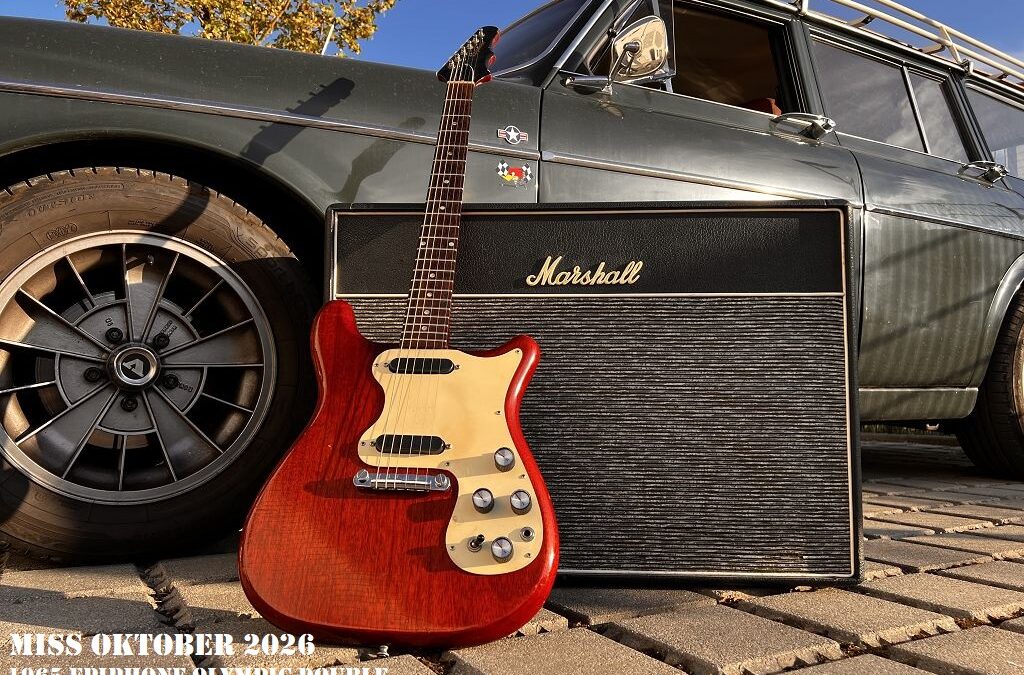
Golden October, perfect Oktoberfest weather, and two of my favorites that are currently for sale in the lounge:
A ’65 Epiphone Olympic and my all-time favorite amp, a ’67 Marshall Mini Bluesbreaker.
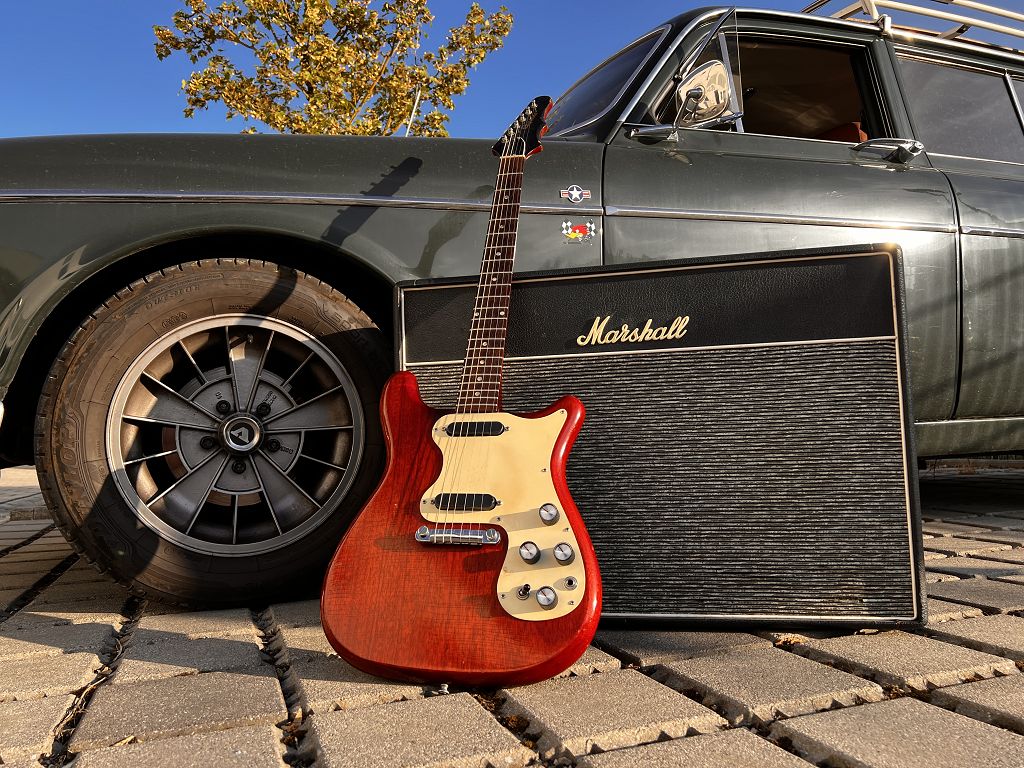
Let’s start with the amp, and here’s the good news right off the bat:
Since I already have one, I’m selling this amplifier; otherwise, I would have kept it.
The Marshall Model 1973 is my absolute favorite amplifier. That’s pure rock ‘n’ roll—a smooth distortion at a reasonable volume; that sound is addictive.
1958 Model: 2×10″ Combo
1973 Model: 2×12″ Combo
1974 Model: 1×12″ Combo
The 2×12″ combo is the preferred choice.
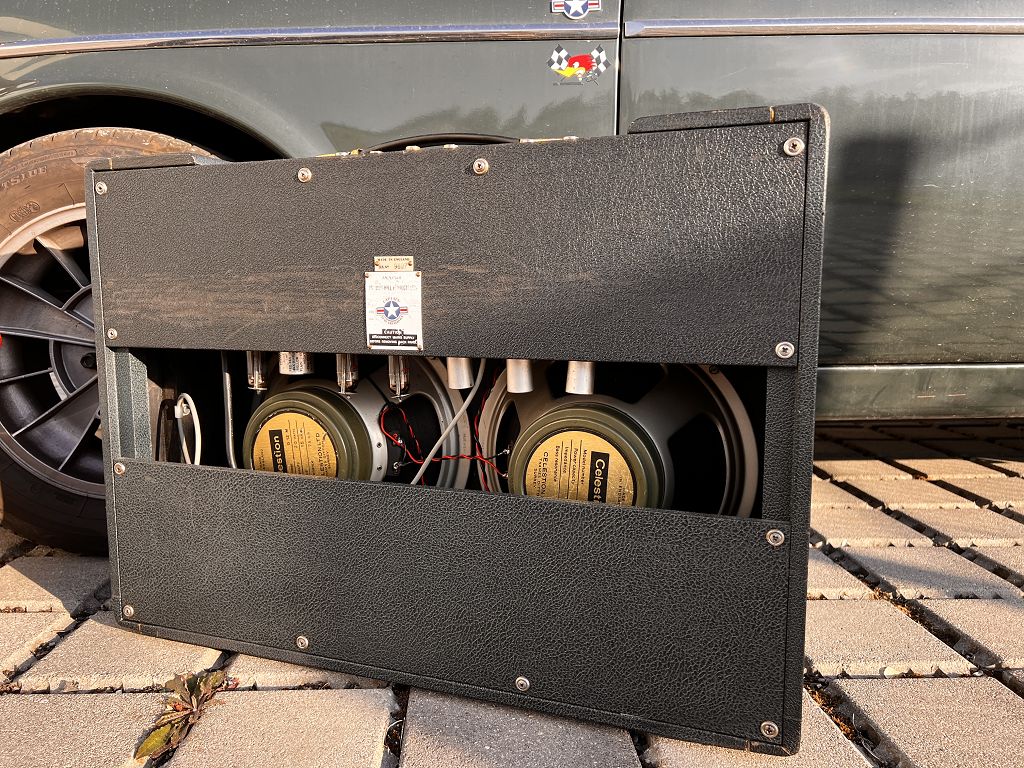
A key component of the sound is the pair of Celestion T1221 Greenbacks, which at that time could handle 20W and did not yet have any reinforcement on the surround.
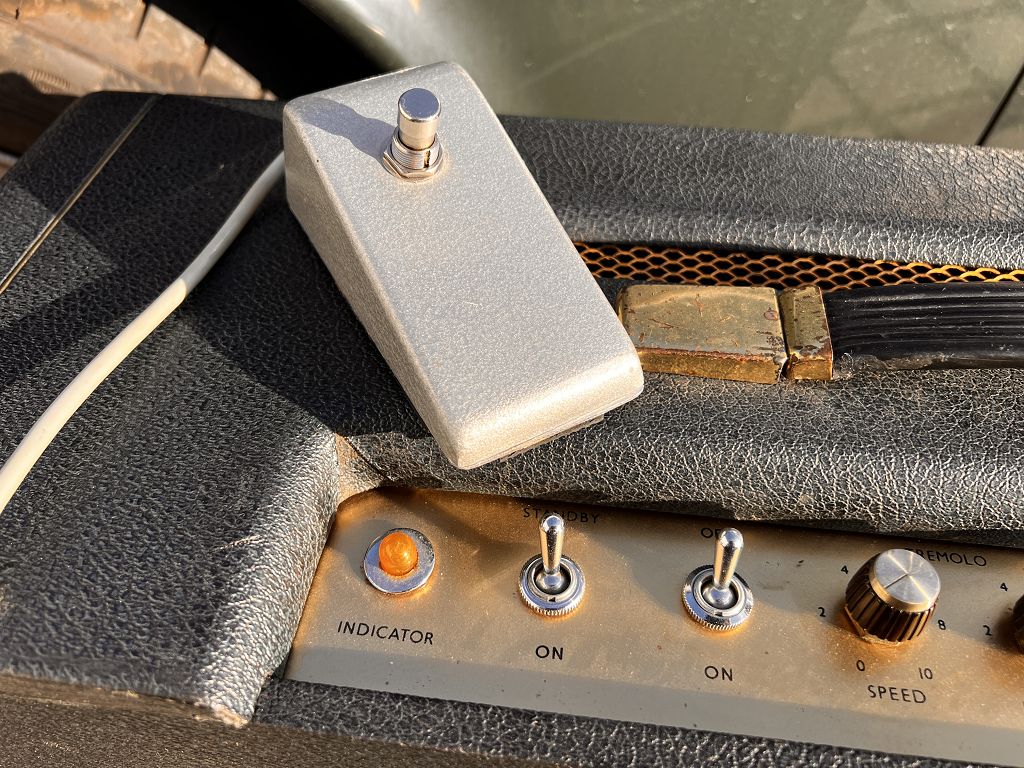
The amp has three ECC83s in the preamp stage, two EL84 power tubes, and one EZ81 rectifier tube. The second channel has a tremolo that sounds a little less smooth than what we’re used to from Fender amps. It can be controlled remotely using a foot switch.
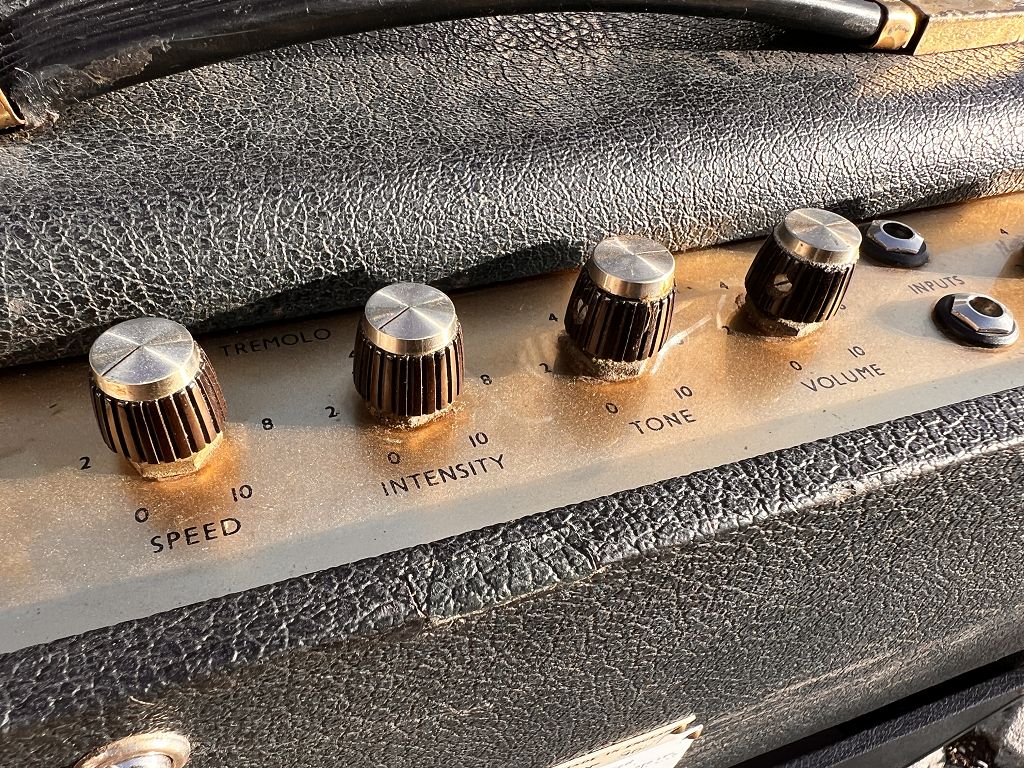
Except for the footswitch and a few components on the turret board, everything on this unit is original. The two transformers are from Radio Spares, the coupling capacitors are, of course, Mustard Caps, and even the old electrolytic capacitors from RS and Hunts are still listed in the specs. A true collector’s item.
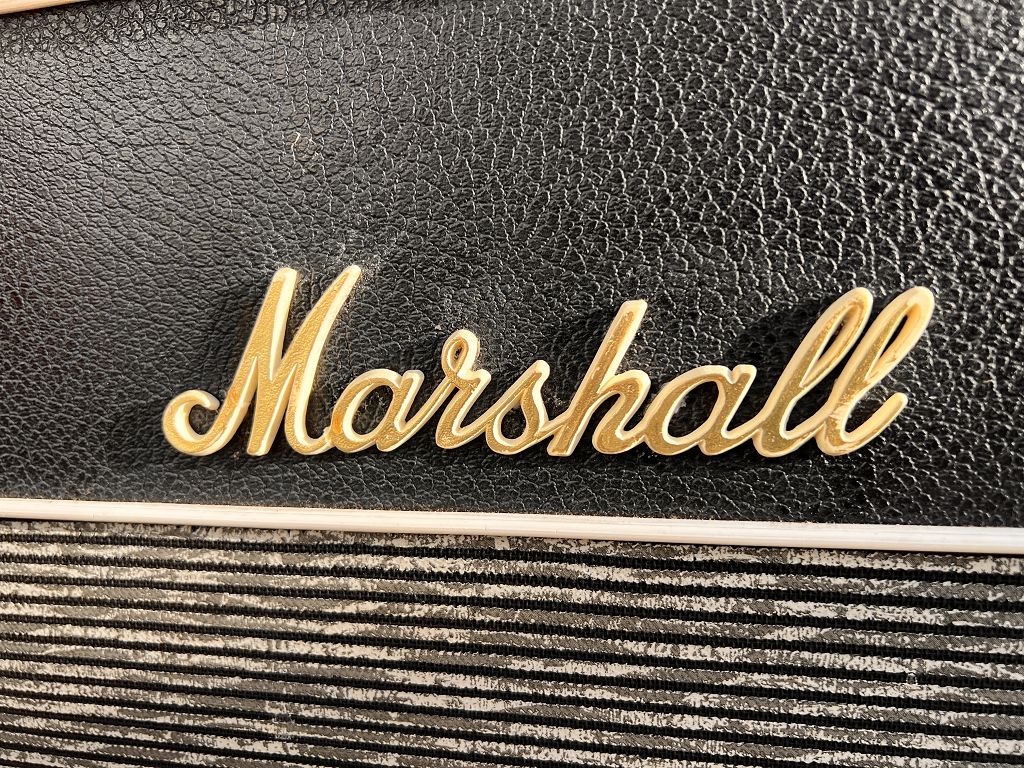
This nearly 60-year-old amplifier is in unbelievably good condition. Considering how fragile the pinstripe front covering is, it’s nothing short of a miracle that it’s in such good condition. Jimi Hendrix’s amps were already blown out after just a few gigs. The Plexi front panel isn’t broken, and the gold Script logo is still in one piece. Perfect.
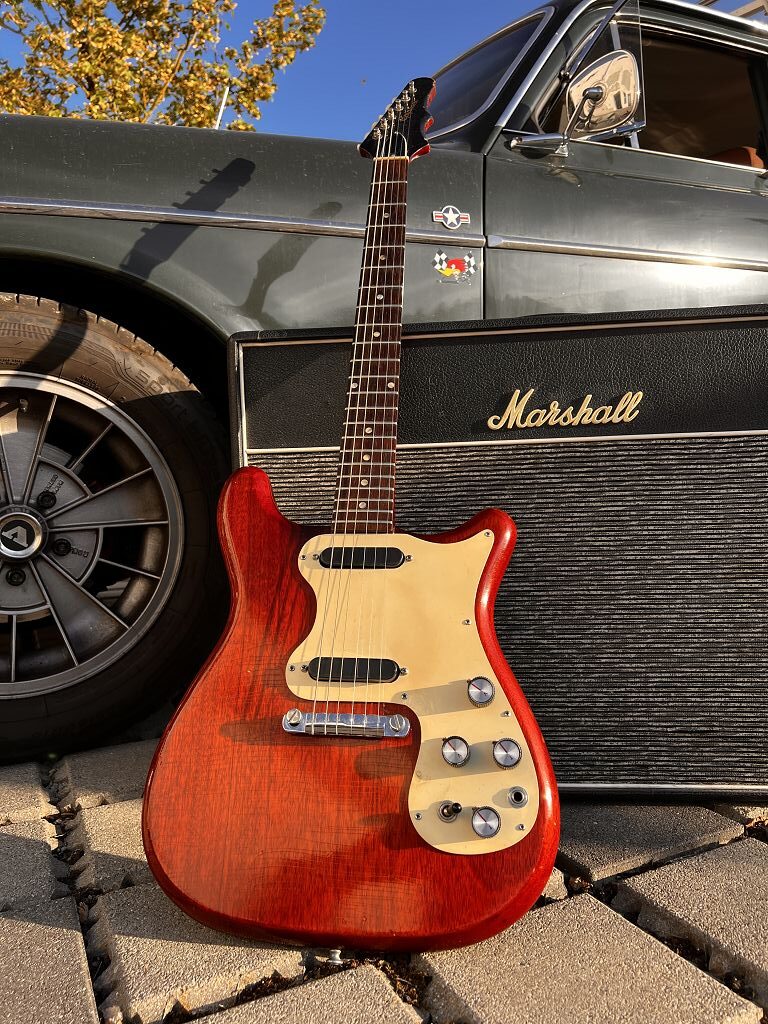
The ’65 Epiphone isn’t quite as rare as the amp. It was the entry-level model, just like the Melody Maker from Gibson. It was also manufactured at the Gibson plant in Kalamazoo. While the early models from 1960 to 1962 still used the Melody Maker body, starting in 1963 they featured this asymmetrical Coronet-style body. At first, the guitars had an Open Book 3/3 headstock, but starting in 1965, they switched to this Batwing 6-in-a-row headstock. How cooooool is that!!??
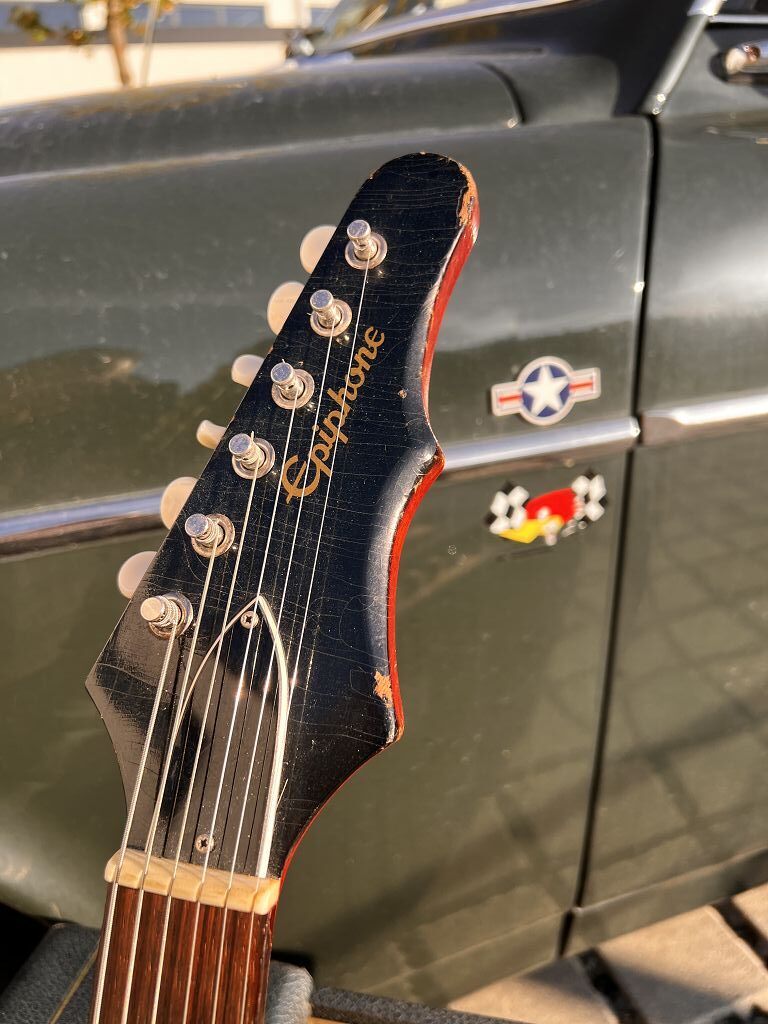
The wiring was identical to that of the Melody Maker: a toggle switch and one tone and one volume pot for each of the two pickups. The PU380 single-coil pickups are also identical. They don’t have as much output as a P90, but they have a very distinctive sound. Unlike Fender pickups, they do not contain six individual magnets, but rather one large rectangular magnet in the center of the coil, similar to that found in PAF pickups.
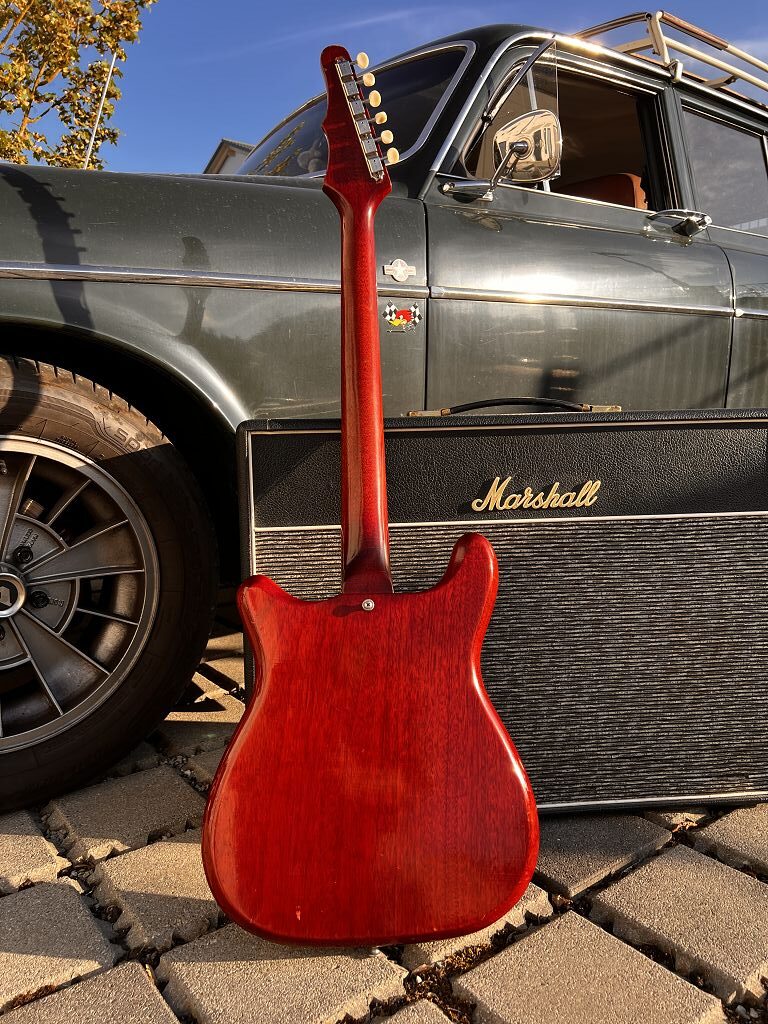
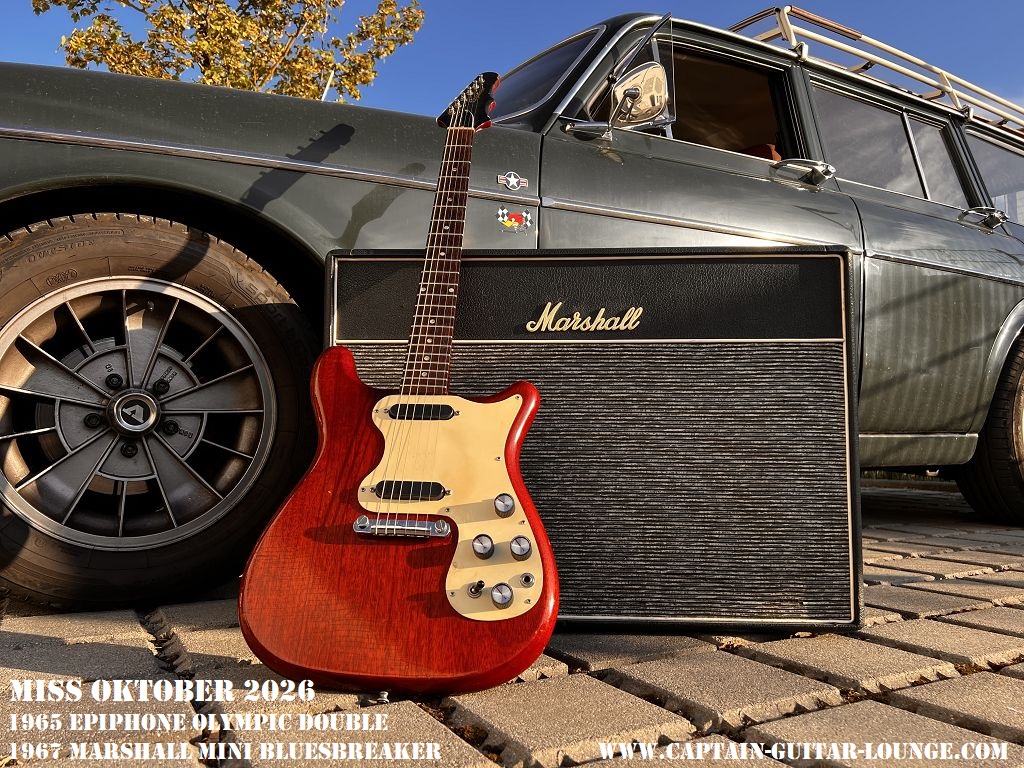
I just plugged them in again—it’s really amazing how soft and sweet that mid-range rock sound is. And with all the knobs turned up to 10, it’s so loud it feels like there’s no tomorrow. It’s a bit louder than room volume, but unlike the “big” JTM45 Bluesbreaker, it won’t blow your ears off, and it’s still a blast even after three minutes!
These two little gems are ready for you to try out in the lounge:
1967 Marshall – Bluesbreaker Mod 1973 – 18 watts – ID 5767
1965 Epiphone – Olympic Double – cherry – ID 6199
The ’67 Volvo Amazon station wagon is not for sale 😉