

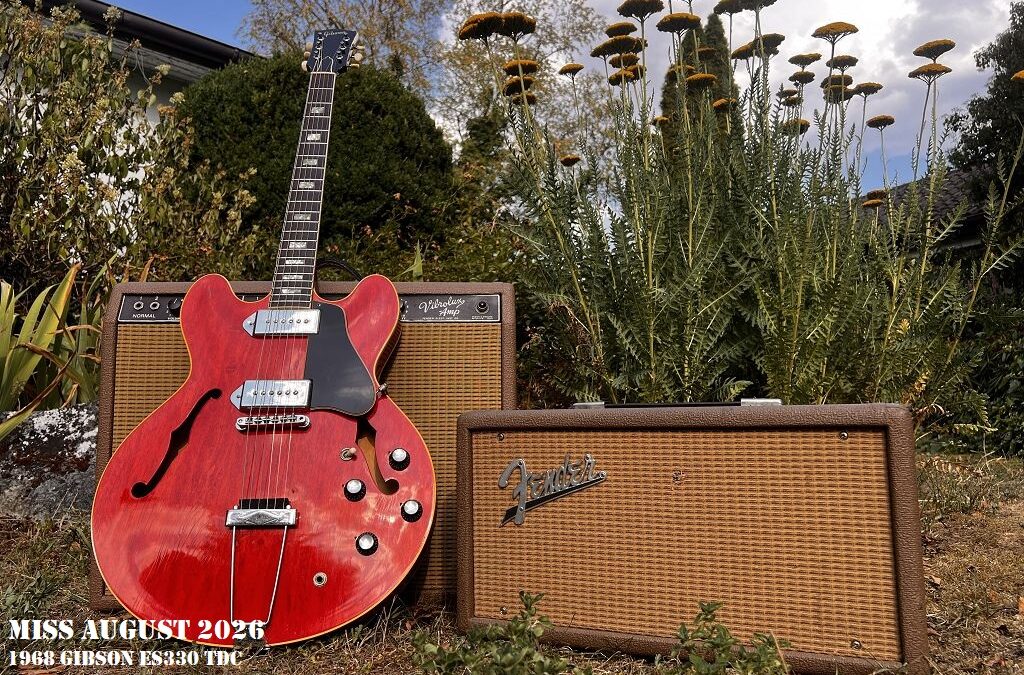
It’s really hot out here—almost like in California. That’s also where the two Brownface Fenders come from—a 1962 Vibrolux amp and a 1963 Reverb Unit.
The Gibson ES-330 TDC, on the other hand, comes from the cool north; Kalamazoo is located in Michigan, halfway between Detroit and Chicago.
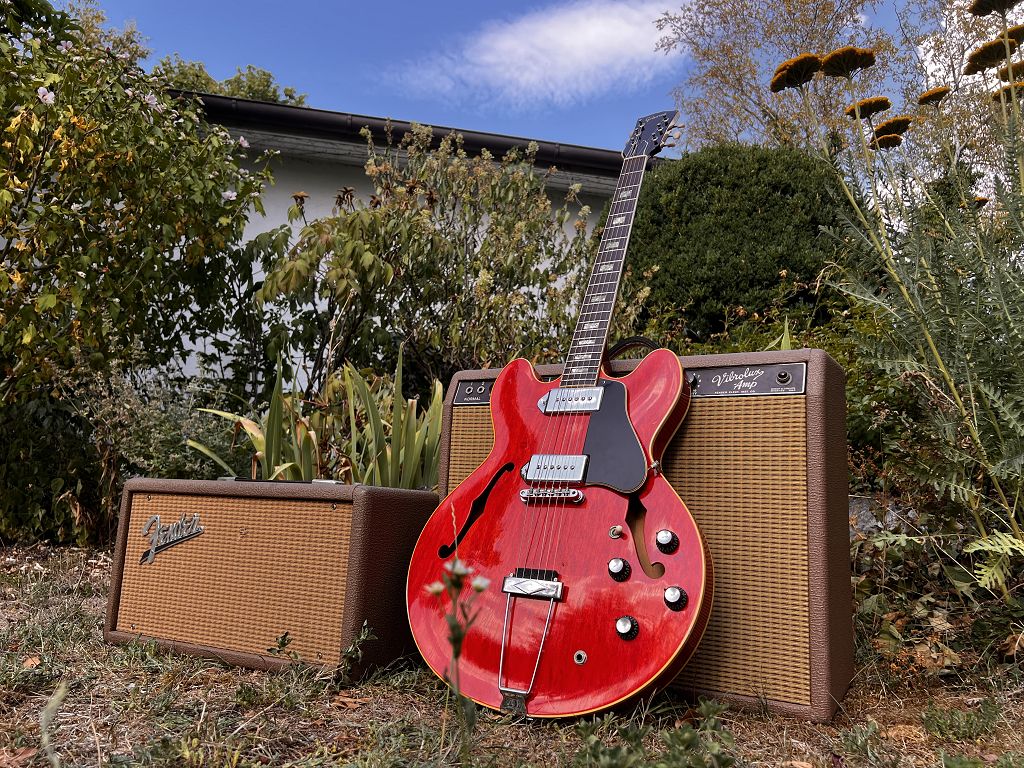
Gibson introduced the ES330 in 1959 as a more affordable version of the legendary ES335, at the same time as the top-of-the-line ES345 and ES355 models. It was available as the ES330T with one P90 and as the TD with two P90s.
Unlike the 335, the 330 does not have a sustain block; its construction is more similar to that of the 350T or the 225.
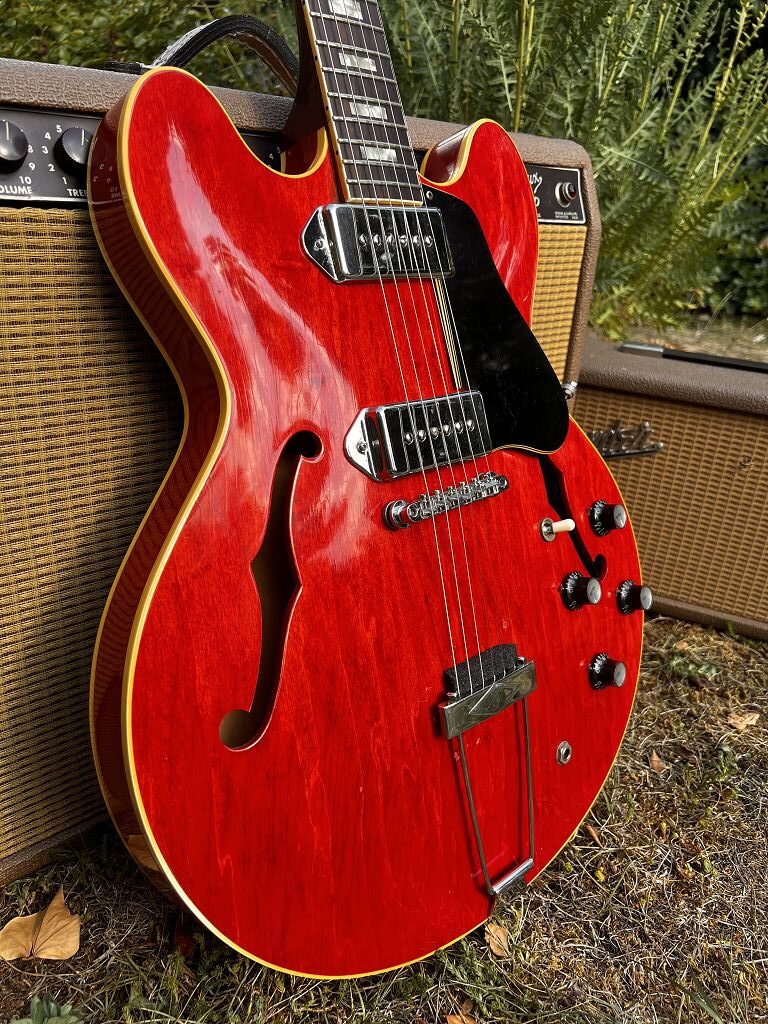
Until 1967, the 330 was built with a shorter neck; the transition to the body is at the 16th fret. That makes playing solos in the higher registers a bit difficult. Since late 1967, it has been at the 19th Bund, just like the 335th.
When sales figures declined, the model was discontinued in 1972.
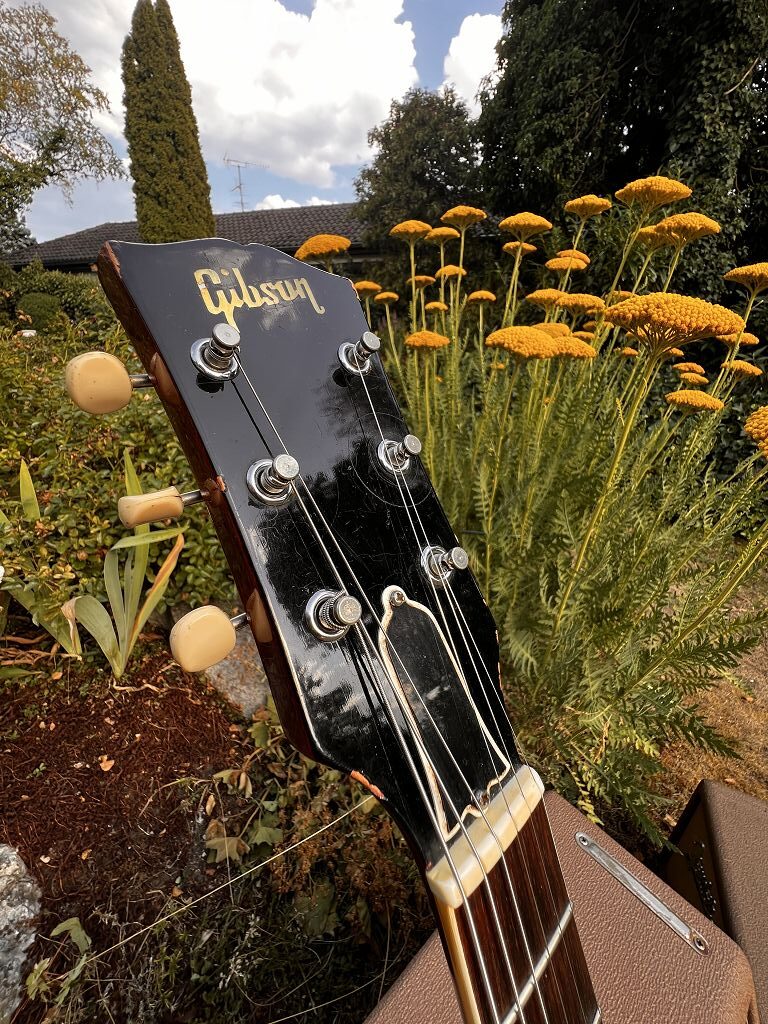
Consequently, this ’68 model already has the long neck and, of course, the chrome pickguard covers that were introduced as early as 1962. The hollow construction makes for a lightweight guitar; this model weighs just 2,836 grams.
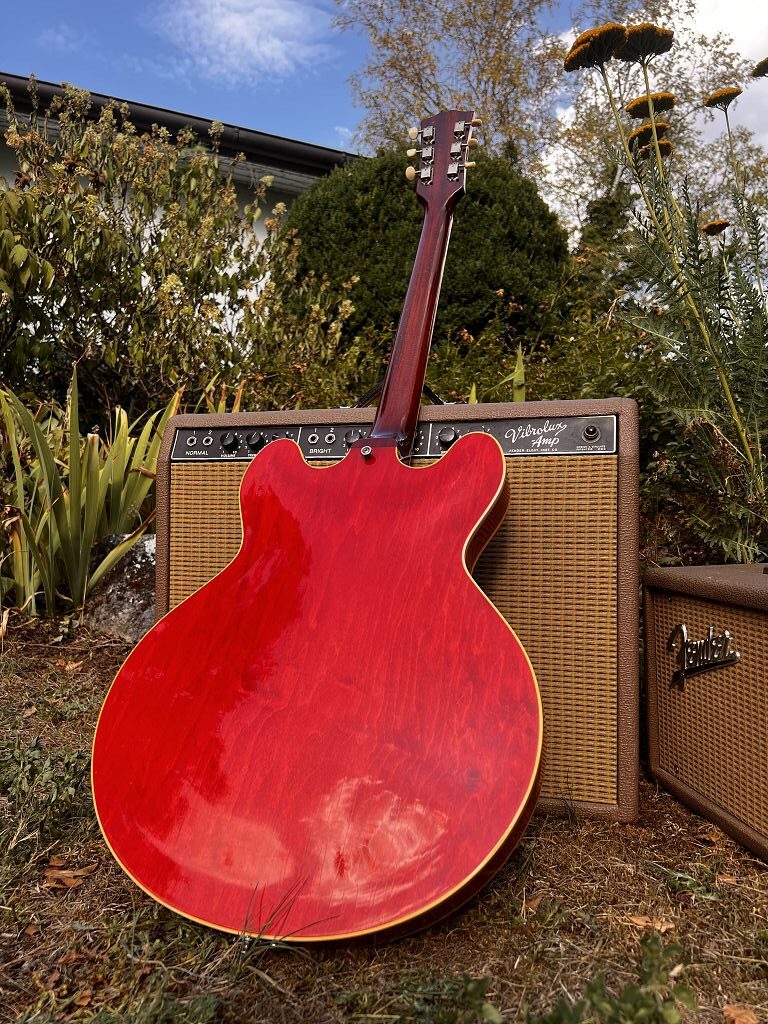
She had to put up with a few changes. There used to be a Bigsby mounted on it, but now the original trapezoid tailpiece is back on. The nylon string retainers were replaced with metal ones, and instead of the original “Witch-Hat” buttons, the earlier version with the silver inlays has been installed.
Otherwise, the guitar is in its original condition, in remarkable shape, and in excellent working order.
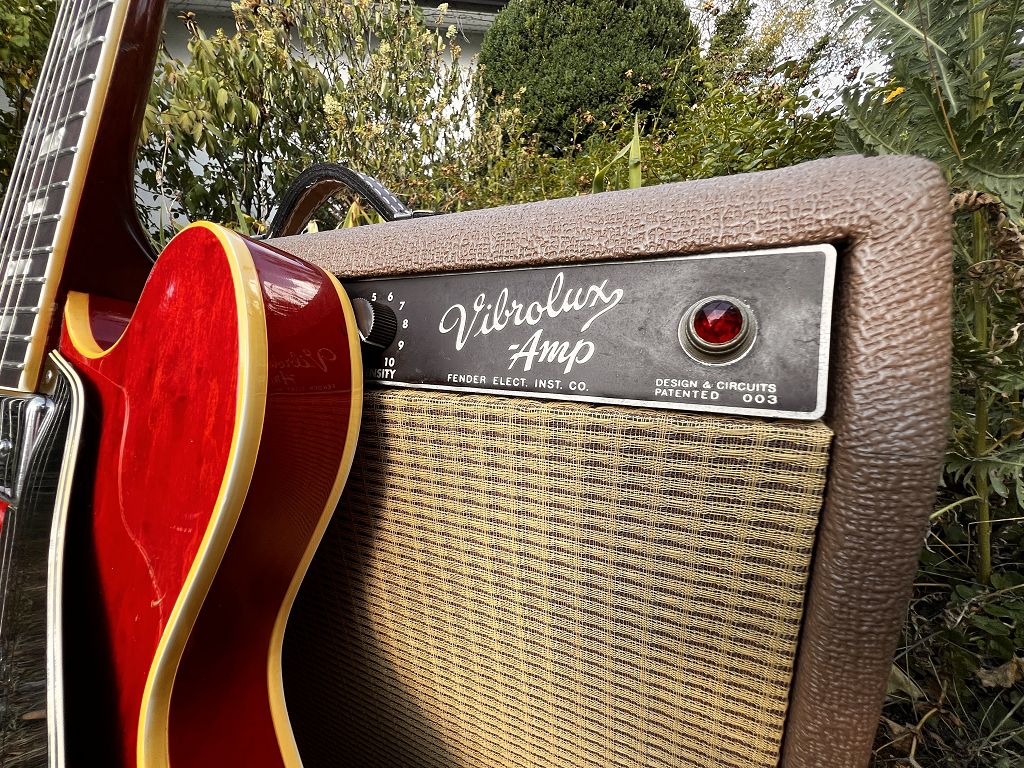
The condition of the Brownface Fender Vibrolux is also noteworthy. At first we thought the Tolex was original, but it turns out someone had masterfully reupholstered it. In addition, the power transformer was replaced with a 230V model to eliminate the need for the cumbersome step-up transformer.
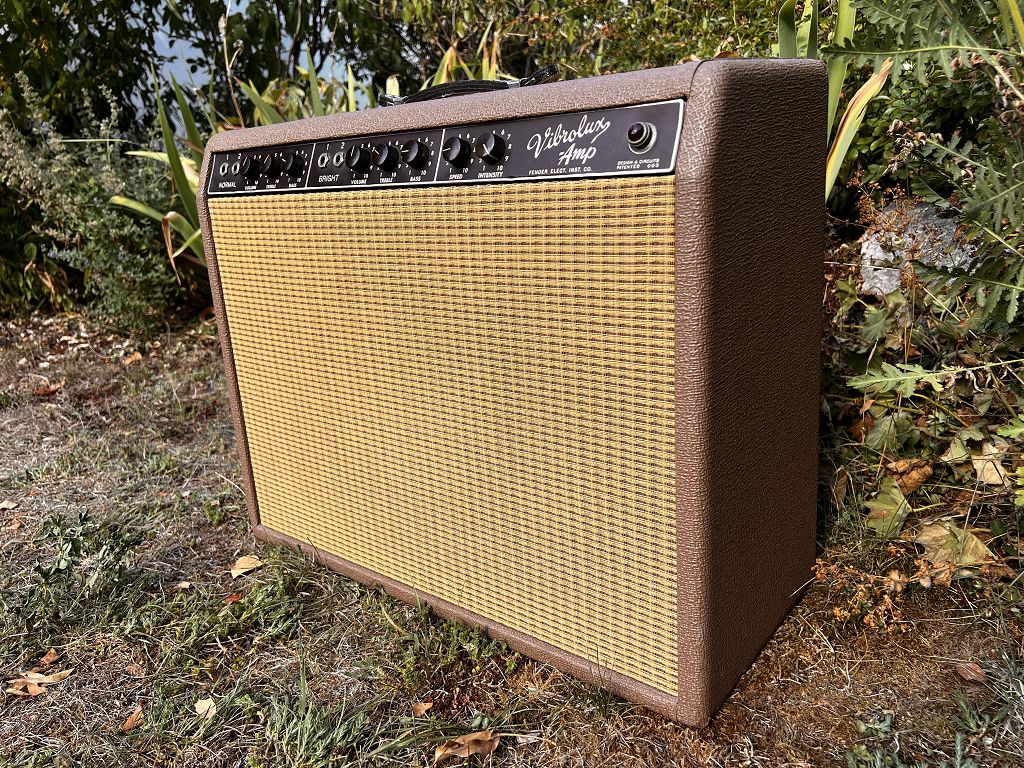
The Vibrolux was the only amplifier in Fender’s product lineup in the 1960s that featured 6L6 power tubes and a single 12-inch speaker. And that was exactly his problem: This Oxford 12L6N was recommended for amplifiers up to 20 watts, with a peak power of 30 watts. Only a few survived.
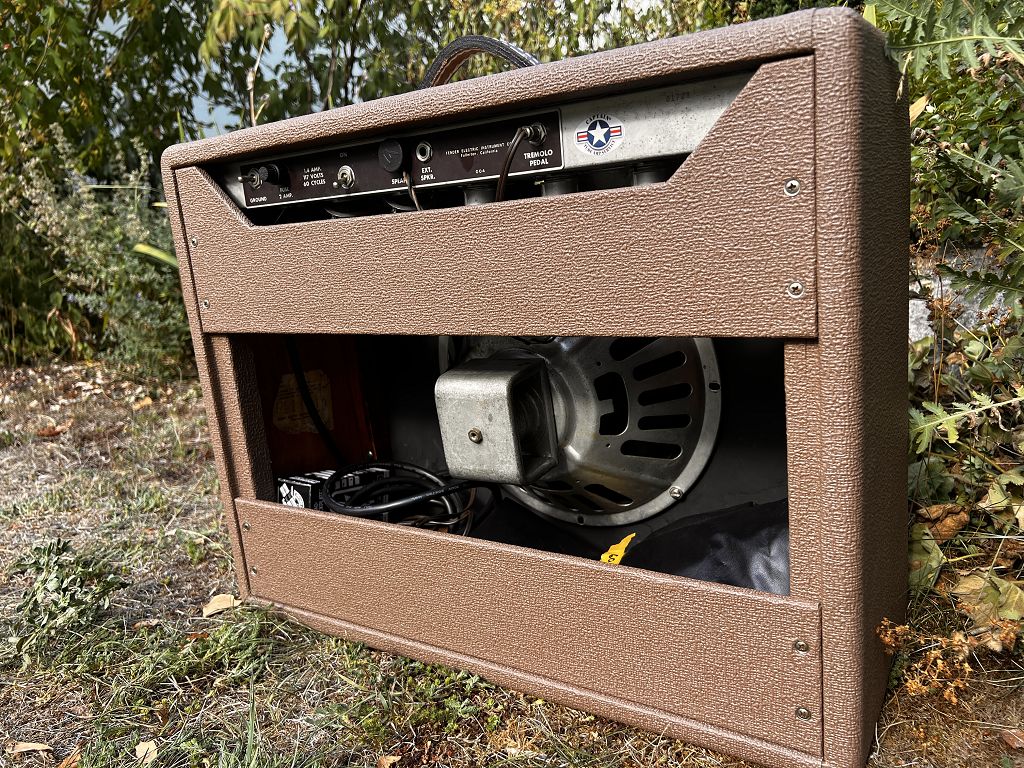
Mark Knopfler recorded “Sultans of Swing ” using a brown Vibrolux. However, the original speaker had already been damaged by excessive power, so a Fane speaker had been installed.
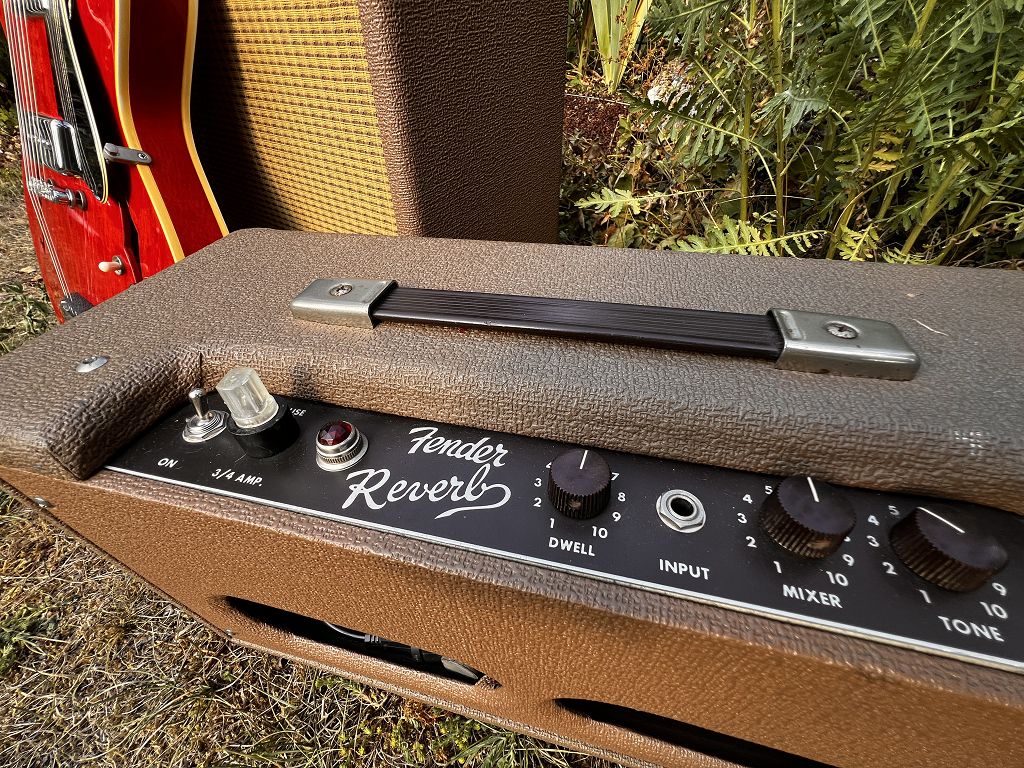
Since Fender’s built-in reverb wasn’t introduced until 1963 with the Vibroverb amp, musicians had to use an external unit—the Fender Reverb Unit—until then.
Without these instruments, there probably wouldn’t have been any surf music, and Dick Dale would have had to play country music.
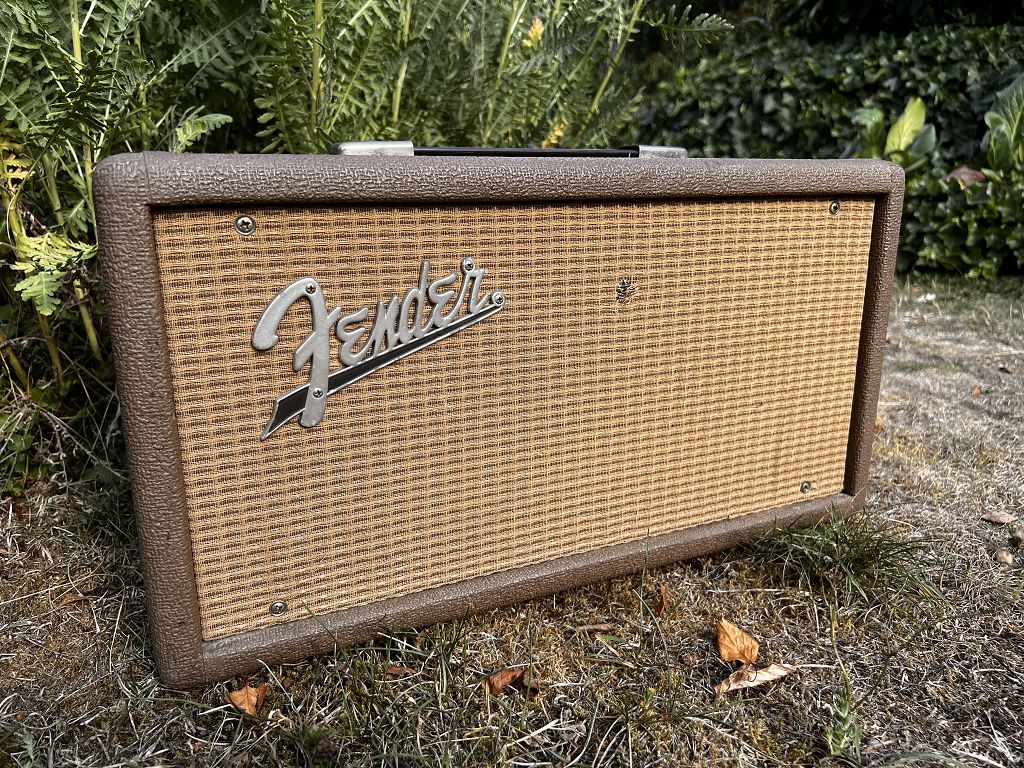
The device was simply connected before the amplifier (the loop-in path wasn’t invented until a decade later), and suddenly, entirely new worlds of sound opened up.
The Dwell knob was used to control the reverb coil; the Mix knob controls the proportion of the reverb signal in the sound; and the Tone knob was used to adjust the treble content of the reverb signal. The reverb can be turned off using a small brown footswitch.
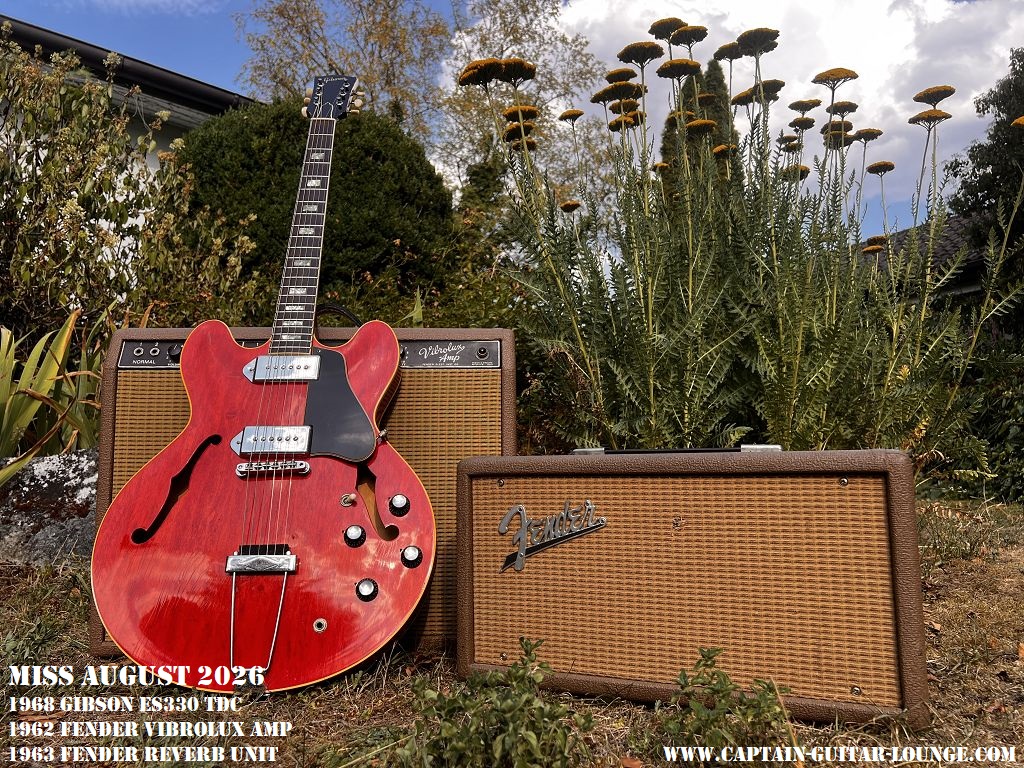
Together, they make for another dream combination—you can’t get any more vintage than this.
And best of all: You can try all three out in the lounge and buy them there:
1968 Gibson – ES-330 TDC – Long Neck – ID 6014
1962 Fender – Vibrolux Brownface – ID 6015
1963 Fender – Reverb Unit, brown, 6G15 – ID 6016